01
Functional Management
Supporting observation and management of changing function in daily life.
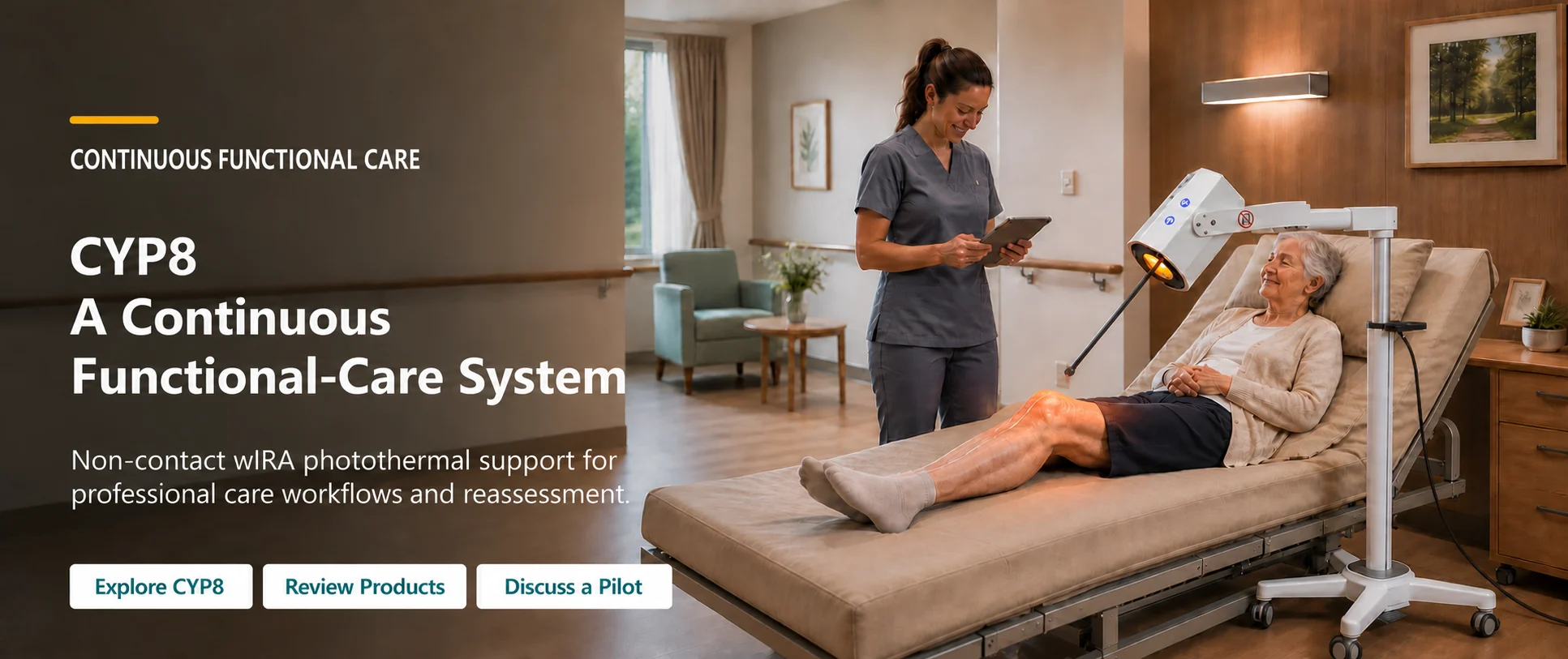
Non-contact wIRA photothermal support for professional care workflows and reassessment.
Built for professional care organizations supporting older adults through functional management, continuous care, and the long-term goal of independent living.
Supporting observation and management of changing function in daily life.
Connecting routines, observations, handovers, documentation, and reassessment over time.
Supporting everyday activity and independence for as long as possible.
CYP8 is designed for professional care organizations supporting older adults through functional management, continuous care, and structured reassessment within everyday care pathways.
For organizations supporting older adults through structured daily care, functional observation, and continuity across routines.
For nursing teams that need repeatable professional routines, clear handover context, and structured review pathways.
For teams reviewing non-contact support alongside wound-care pathways, documentation, and care continuity.
For teams focused on mobility, activity tolerance, functional change, and participation in daily life.
For professional services coordinating ongoing observation, documentation, and continuity across care environments.
For care organizations, CYP8 is evaluated not simply as a photothermal device, but as a continuous functional-care system considered within structured care pathways for older adults.
Organizations review how CYP8 fits existing professional routines, staff roles, intended care settings, and practical use requirements.
Teams may organize session context, relevant observations, handover information, and functional reassessment within an existing professional workflow.
A structured review helps organizations assess practical fit, staff feedback, documentation approach, and implementation readiness before wider adoption.
These priority application areas show where professional care teams may evaluate CYP8 within existing care pathways for older adults. Each area is considered through its functional, observational, documentation, handover, and reassessment context.